
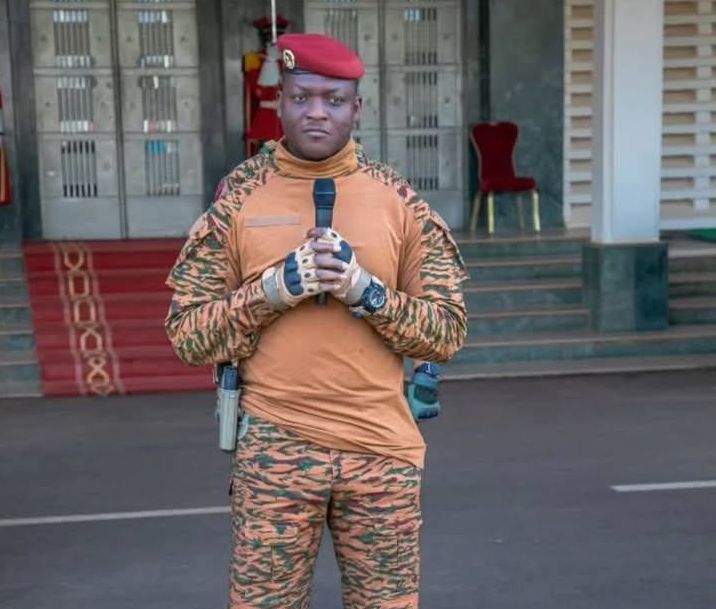
Captain Ibrahim Traoré is a Burkinabè military officer who has served as the interim leader of Burkina Faso since the coup d’état on September 30, 2022. At the time of his ascension, he became the world’s youngest serving head of state.
Early Life and Education
-
Birth: Born on March 14, 1988, in Kéra (Bondokuy), western Burkina Faso.
-
Education: Completed primary and secondary schooling in Bobo-Dioulasso.
-
Academic Background: Enrolled at the University of Ouagadougou, where he studied science and geology, earning his bachelor’s degree with honors in 2009.
Military Career
Traoré joined the Burkinabé Armed Forces between 2009 and 2010, marking the start of a rapid ascent through the ranks:
-
Training: Graduated as a second lieutenant from the Georges Namoano Military Academy in Pô.
-
Combat Experience: Served with distinction in the Sahel region against Islamist insurgencies.
-
International Service: Deployed with MINUSMA (United Nations Multidimensional Integrated Stabilization Mission in Mali).
-
Promotion: Attained the rank of Captain in 2020 following leadership roles in counterterrorism operations in northern Burkina Faso.
Rise to Power
Traoré’s path to leadership was defined by the political instability of 2022:
-
January 2022: Part of the military group that overthrew President Roch Marc Christian Kaboré.
-
September 2022: Led a successful coup to remove Lieutenant-Colonel Paul-Henri Sandaogo Damiba due to dissatisfaction with the government’s handling of jihadist violence.
-
October 6, 2022: Officially proclaimed Interim President and head of the Patriotic Movement for Safeguard and Restoration (MPSR).
Leadership and Policies
Traoré’s governance is defined by a shift toward nationalism and pan-Africanism:
-
Ideology: Anti-Western and anti-imperialist, often invoking the revolutionary legacy of Thomas Sankara.
-
Foreign Policy: Distanced Burkina Faso from traditional partners like France, seeking new alliances with non-Western actors.
-
Domestic Focus: Emphasized national sovereignty, security, and self-reliance.
-
Transition: While originally pledging a return to civilian rule by July 2024, transitional arrangements have since extended his mandate.
Public Image and Criticism
| Perspectives | Key Points |
| Supporters | Admire his youthful energy, commitment to sovereignty, and “Africa-first” rhetoric. |
| Critics | Raise concerns over human rights, media restrictions, and the lack of a clear timeline for democratic elections. |
| Current Status | His leadership remains a focal point of the complex security and governance struggle in the Sahel. |
Get real time update about this post category directly on your device, subscribe now.