
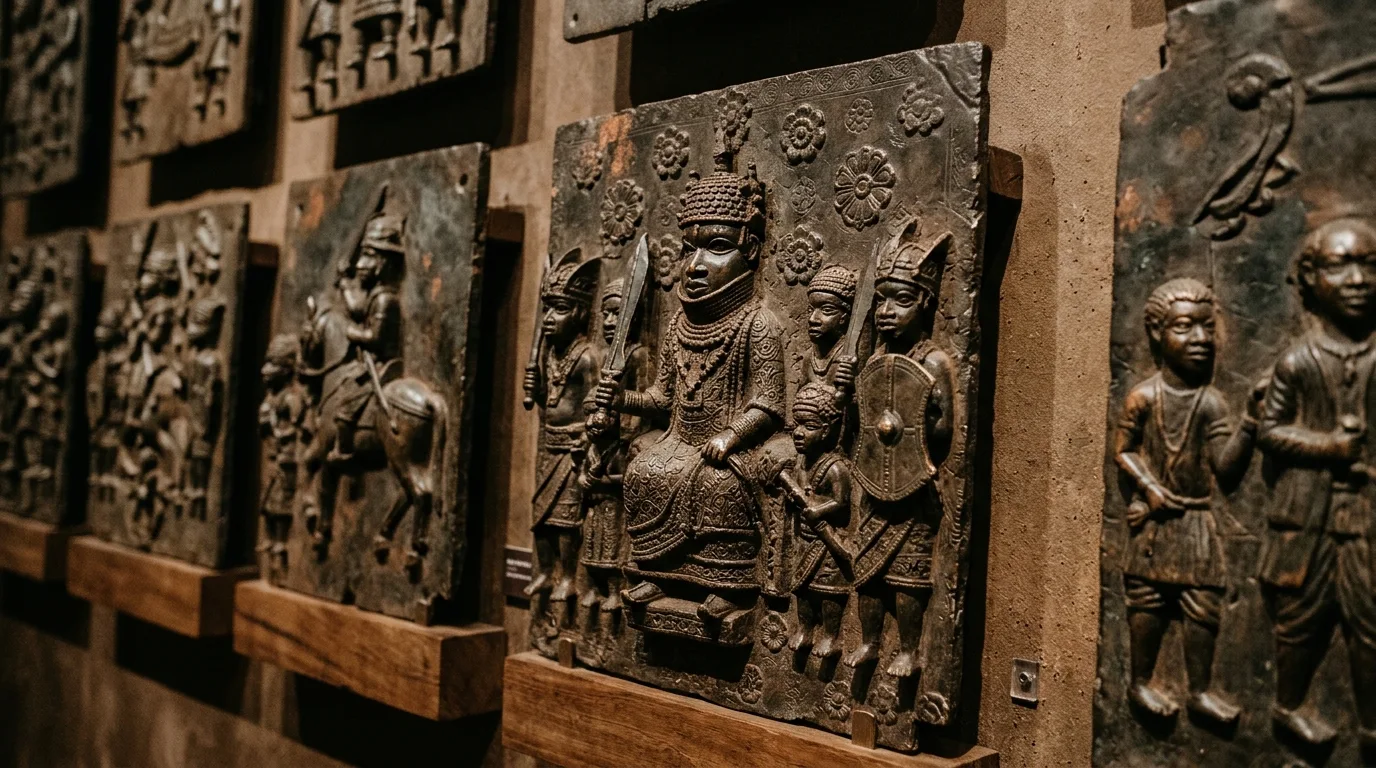
In the ancient Benin Kingdom, brass casting and hereditary craft guilds were central instruments of statecraft, visual record-keeping, and royal authority. Although art historians often refer to these works as “Benin bronzes,” most were cast in brass or copper alloys using the intricate lost-wax (cire perdue) technique. Working under the strict patronage of the Oba (king), artisans turned durable metal into a medium that projected royal power and preserved court memory in a society that relied primarily on oral tradition.
Hundreds of rectangular cast brass relief plaques once mounted on the pillars of the Oba’s palace documented royal ceremonies, warriors, titled chiefs, musicians, and foreign visitors, including Portuguese traders from the late 15th century onward. Alongside commemorative heads (Uhunmwun-Elao) placed on ancestral altars to honor past Obas and queen mothers (Iyoba), these works anchored political legitimacy across generations. Fine details—such as coral bead regalia, ceremonial swords, and layered hairstyles—communicated rank, lineage, and ritual status at a glance.
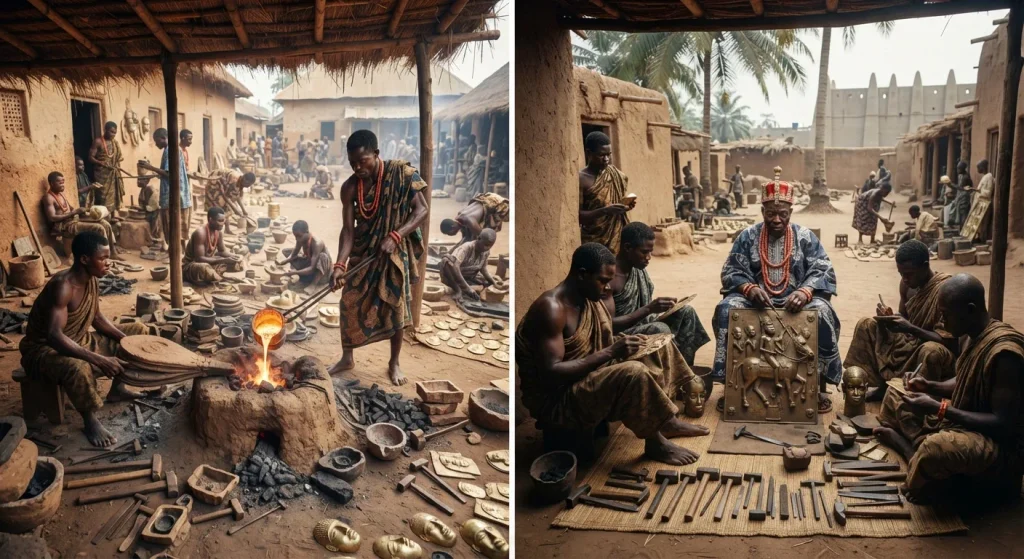
Artisans were organized into specialized palace guilds (eghaevbo n’ogbe) that passed down technical secrets within families and operated under royal oversight. Members of Igun Eronmwon, the brass casters’ guild based in a dedicated quarter of Benin City, cast primarily for the Oba, while neighboring guilds like Igbesanmwan (carvers of ivory and wood) and Iwebo (keepers of royal regalia) complemented court ceremonial life. According to Benin oral tradition, Oba Oguola invited the master caster Iguegha from Ife to establish brass casting in Benin, linking the kingdom’s craft heritage to a revered spiritual center.
Brass casting also connected the Benin Kingdom to wider regional and Atlantic trade networks that shaped its political economy. Early metal supply drew on trans-Saharan trade and local recycling, while European merchants later exchanged heavy brass manilas and rods for goods such as pepper, ivory, cloth, and captives. By regulating scarce raw materials and skilled workshops, the Oba reinforced central authority over chiefs and expanded the splendor of the court.
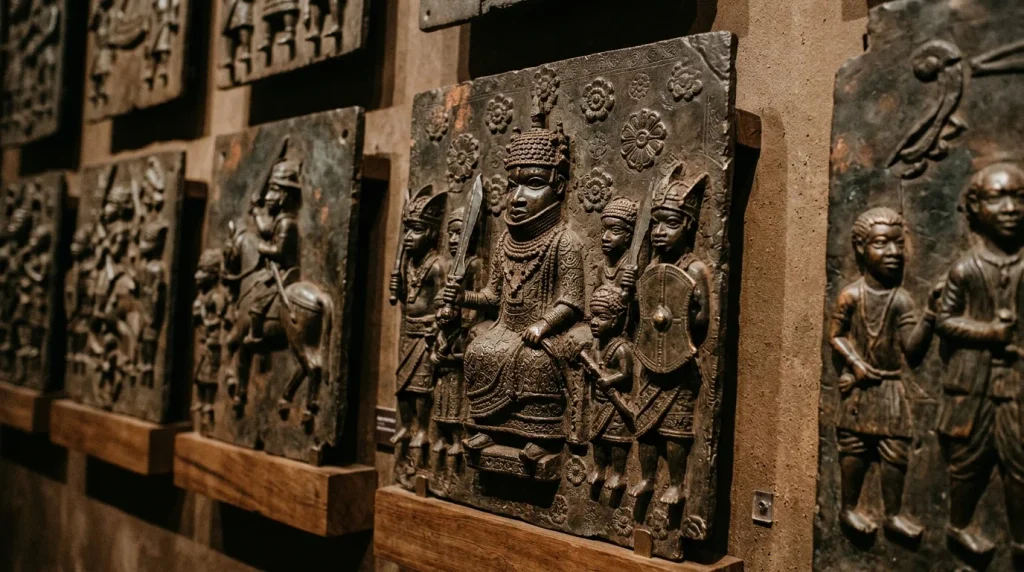
To the Edo people, brass held sacred value because its gleam and resistance to rust symbolized permanence, spiritual force, and connection to ancestors and deities such as Olokun. In 1897, a British punitive expedition looted thousands of brass plaques, sculptures, and ivories from the royal palace, scattering them across museums worldwide. Today, those works remain both masterpieces of African metallurgy and focal points of ongoing cultural heritage and restitution efforts.
Get real time update about this post category directly on your device, subscribe now.